


 49 / 68

 ELECTRIC.IE
• The Magazine & Website for the Irish Electrical Industry •
47
a complicated web of wires. It saves
both energy and raw materials,
while dramatically cutting
installation and maintenance costs.
In mesh networks, each wireless
node communicates with the one
adjacent to it. Should one node
fail, information is automatically
rerouted to allow devices to carry
on their respective functions. This
dynamic node link redundancy
contributes to Zigbee’s low
maintenance needs and high
reliability. Thanks to this rerouting
capability, nodes on a ZigBee
can “walk through” walls and
even communicate with each
ǯ ƪǤ
Furthermore, even when they are
not in line of sight, nodes are still
able to form networks.
Mesh networks like Zigbee and
its nearest competitor, Z-Wave
do not experience signal loss —
partly because of their very low-
bandwidth. This low-bandwidth
makes these standards great for
simple devices like window and door
motion sensors, or smart lightbulbs
that only need data connections to
ǡ ơ Ǥ
ǡ ơ
lighting, heating and cooling can be
automated to improve conservation,
convenience and safety. Households
Ƥ
automation systems are capable
of providing the users with
information on their usage trends.
Consumers can then optimise their
consumption of natural resources
whilst being aware of the cost and
scale of their use.
Home automation systems such
as Schneider Electric’s C-Bus
Wiser Home Control System gives
homeowners an insight on their
energy usage thus allowing them
to reduce or shift energy use during
peak times, saving money in return
and ultimately helping electricity
providers reduce load on the grid
and improve network reliability.
Connectivity
We are looking to drive the change
in what homes can do for their
owners. Together with architects,
engineers, electricians and
other partners, we are bringing
connectivity to homes through
Ǧ
home control systems. These
technologies connect a wide variety
of devices, allowing home owners
to control everything from lighting
and temperature to entertainment
systems — to create a perfect
environment for every moment.
By integrating energy management
with other home control functions,
Ǧ
systems go beyond automation.
They turn homes into smarter living
spaces. They let us monitor and
manage our homes to maximise
ƥ
bills, either locally or remotely.
This also ensures the integration of
any future comfort, security, and
energy saving functions. Along
ǡ
the central control unit can
communicate with other devices
Ǥ
combination of mobile devices
and remotely operated technology
has given us this freedom and it’s
transforming how we live.
From an energy saving perspective,
Schneider Electric
home automation has some
Ƥǡ
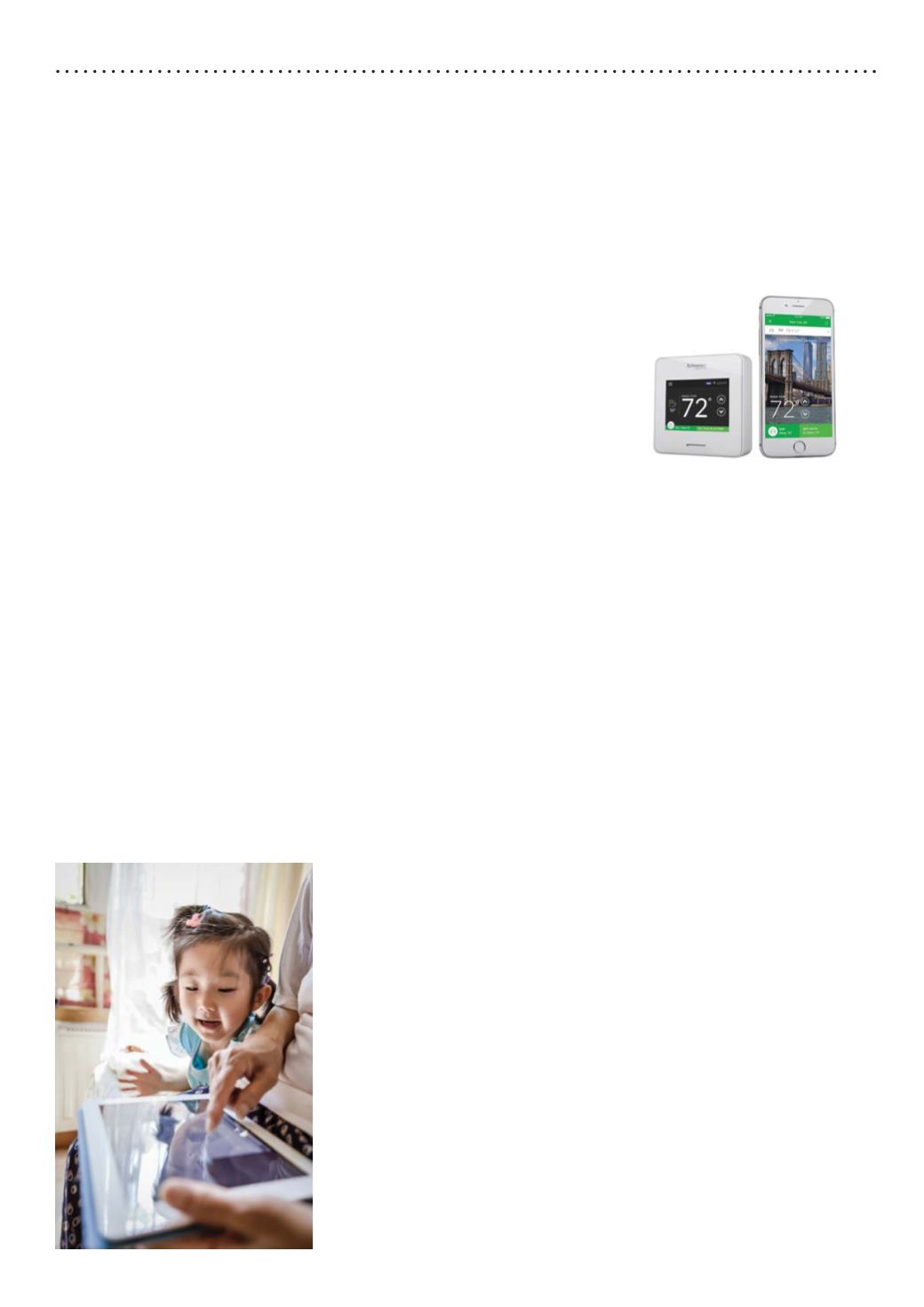
programmable thermostats. Turning
down a thermostat by just one
degree can reduce heating bills by
up to ten per cent, and most Ireland
smart/programmable thermostats
promise a reduction in heating bills
of up to 20 per cent.
C-Bus Wiser lets you program,
monitor and operate your home’s
heating and air conditioning,
lighting, appliances, electronics
and security systems while home or
away and adjust them according to
what you want to pay each month.
Ƥ
or comfort, you can make smart
decisions and choices that can
achieve savings of up to 30 per cent
on your home’s annual energy costs.
There’s both a growing need and
desire for people to be more energy
ƥ Ǥ
regarding global warming and
rising energy costs are always in
the headlines, and homeowners are
increasingly worried about keeping
their utility bills in check. However,
people looking at installing a
smart home system also want an
ƪǡ
a connected system that can be
updated and added to over time
is very much in line with people’s
habits and needs.
ƥ
controlling your habits more readily
and looking for ways to lower your
carbon footprint, but there doesn’t
have to be a compromise with style
and aesthetics. There’s a very clear
drive towards this when so much of
our lives are already integrated with
technology – and people are looking
for this to be extended into their
homes.